How to Measure AI SEO Tool Output Quality Without Using Rankings
Measure How to Measure AI SEO Tool Output Quality Without Using Rankings with a 4-part review of brief match, factual accuracy, search-intent fit, and…

Person reviewing a printed document with marked edits
Last updated: October 25, 2026
Quick Answer: Measure How to Measure AI SEO Tool Output Quality Without Using Rankings with a 4-part review of brief match, factual accuracy, search-intent fit, and edit distance; score each draft on a 0–2 or 1–5 scale before you look at rankings. In short: measure AI SEO output quality by checking whether the draft matches the brief, stays factually clean, fits the search result page, and gives an editor less work—not by waiting for rankings. AI SEO output quality is visible in the page itself long before impressions settle.
For How to Measure AI SEO Tool Output Quality Without Using Rankings, use a rubric built around usefulness, correctness, and editorial fit. That means scoring the content brief against the draft, checking source citations, reviewing structure and serp features, and marking where human edits are still needed. If the output fails those checks, the tool is producing noise, not publishable SEO work.
Key takeaways
- Judge the draft against the brief first; search traffic comes later.
- Separate factual accuracy from editorial usefulness, or weak copy can hide in a polished structure.
- A good output should reduce editing time, not create a second drafting job.
- Use annotations and a quality rubric so each review is repeatable.
- Ignore rankings as the primary signal when no publishable page has gone live yet.
What AI SEO output quality means in practice
AI SEO output quality is the degree to which a tool produces usable, correct, and on-brief SEO content that an editor can publish or revise with limited cleanup. For this kind of evaluation, the useful unit is not “Did it rank?” but “Did it deliver the right answer in the right shape?”
That definition matters because SEO tools often look similar at a glance. Two drafts can both have headings, a target keyword, and a tidy length around 1,200 words, yet one may miss the actual search intent, invent claims, or ignore the content brief entirely. The other may need light copyedits and a few source checks. Those are not equal outputs.
A practical way to think about this is to split quality into three buckets:
- Correctness — factual claims, citations, and named entities are accurate.
- Usefulness — the draft answers the searcher’s need, not just the prompt.
- Editorial fit — tone, structure, and section order match the publication’s standards.
If any one of those fails, the page can still be “SEO-shaped” and still be bad output. That is why ranking alone is a poor proxy. A page can rank despite awkward writing because of brand authority, backlinks, or query mismatch. It can also fail to rank for reasons that have nothing to do with the draft itself.
This is also why the subject of AI SEO output quality belongs in its own rubric. A generic content score hides the trade-off between a clean structure and a weak answer. A useful rubric makes that trade-off visible.
The right audience for this method is an editor, content lead, or SEO manager who needs to compare drafts across tools, prompt versions, or writers. It is not for someone trying to choose which software to buy tomorrow; that is a different question and needs a different test design.
Start with the content brief and compare it line by line
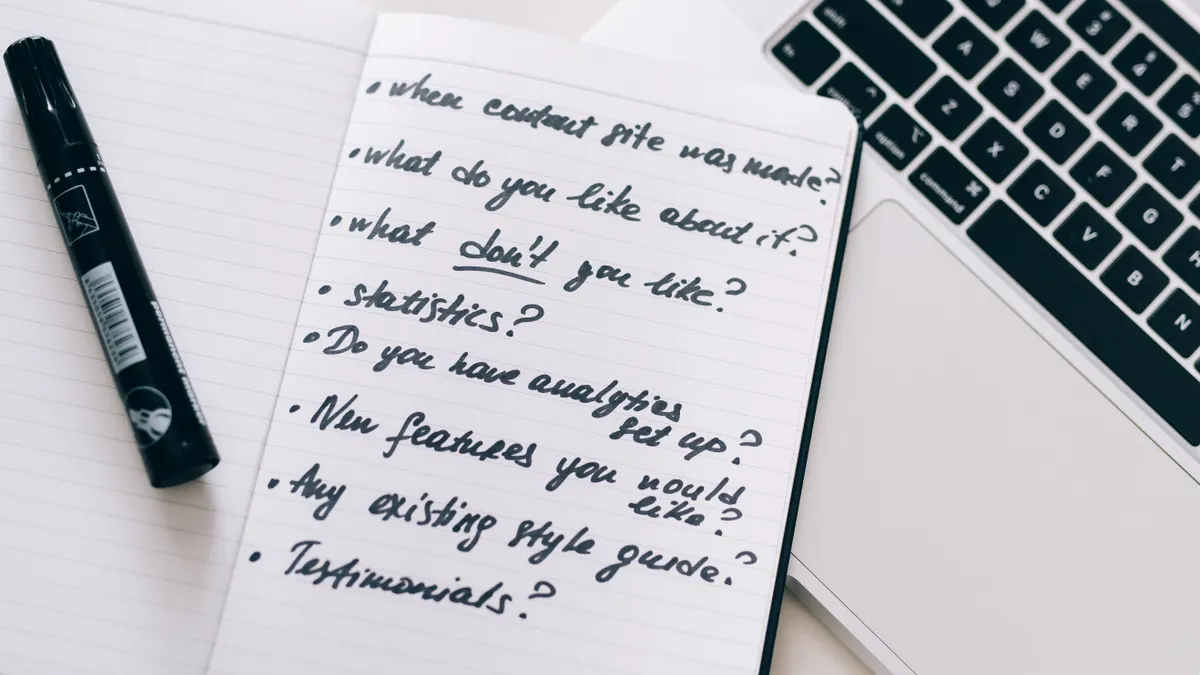
Start with the content brief and compare it line by line against the draft, because a tool that misses the brief cannot be called high quality no matter how polished the prose looks. A simple pass/fail review across the brief’s required items is the best first pass.
Use the brief as the source of truth. If the brief says the article must address a beginner audience, include a comparison table, and mention serp features, those are not suggestions. They are requirements. Mark each one as present, partial, or missing. A missing requirement is a quality defect, not a style preference.
A clean way to score this is with a 0–2 scale for each brief item:
- 0 = missing
- 1 = present but thin, vague, or incomplete
- 2 = fully addressed in the right place
If the brief has 10 items, the maximum score is 20. That is enough to show whether one draft is closer to the target than another without pretending the score is a scientific truth. A draft that scores 16/20 but misses the audience and primary angle is still weaker than one that scores 14/20 and gets the core query right.
What should you see when this step works? The draft should answer the promised question, use the intended angle, and include the required elements without forcing the editor to hunt for them. A well-matched draft makes the brief feel “covered” within the first 2–3 headings.
Where this usually goes wrong is over-coverage. Tools often add generic background, extra definitions, or repeated explanations because they are trying to look complete. That inflates word count without improving quality. If a section exists only to satisfy length, it should be cut or rewritten.
If the brief includes a target SERP pattern, such as a list-heavy results page or results with feature snippets, note whether the draft is built for that format. That is not about ranking yet. It is about whether the output is shaped like something that could reasonably compete on that page.
How do you judge whether the draft matches the search intent?
You judge search intent match by checking whether the draft solves the same problem the searcher has, not by counting keyword variants. If the query asks for a how-to, the draft should behave like a procedure; if it asks for a definition, it should not wander into strategy first.
A useful check is to identify the likely intent class before you score the draft:
- Informational: the reader wants to understand or do something
- Commercial: the reader wants to compare options
- Transactional: the reader wants to take a next step
For this page, the intent is informational, and the output should explain how to measure AI SEO tool output quality without using rankings. If the draft starts with vendor language, product hype, or a buying checklist, it is drifting away from the query.
Look at the opening paragraph first. In a strong match, the first 40 words answer the query directly, name the main subject, and frame the method. If the opening spends two paragraphs explaining what AI is or what SEO means, the draft is probably not serving the real searcher.
Then inspect the body structure. A how-to page should give ordered actions, not a loose essay. If the content hops between accuracy, structure, citations, and editing advice without a sequence, the output may still be useful, but it is not well aligned with the task.
A simple editorial test helps here: could a reader use the article to perform the evaluation in one sitting? If the answer is yes, the intent match is strong. If the answer is no, the tool has produced a summary, not a guide.
This is where rankings can mislead. A draft may aim at the right query and still not rank because the page is new, the site is weak, or the search results are crowded. That tells you almost nothing about output quality. Intent match tells you much more.
Use a quality rubric for correctness, usefulness, and fit

Use a quality rubric with separate scores for correctness, usefulness, and editorial fit, because those problems behave differently and need different fixes. A single overall score hides whether the issue is a wrong fact, a weak recommendation, or a clumsy structure.
A practical rubric can use a 1–5 scale for each category:
- Correctness: Are claims, terms, and citations clean?
- Usefulness: Does the draft solve the reader’s actual job?
- Editorial fit: Does it match the house style, length, and structure?
That gives you a score out of 15. You do not need the number to be perfect; you need it to be repeatable. If two editors score the same draft and land close together, the rubric is doing its job. If one editor sees a 13 and another sees a 7, the rubric is too vague and needs tighter definitions.
Correctness should include factual accuracy, source citation quality, and terminology. If the draft names a standard, a model, or a feature, that reference should be checkable. If the page makes a claim without support, it costs points even if the prose is smooth.
Usefulness should measure whether the draft gives the reader something they can act on. That means specific guidance, not generic reassurance. A useful draft tells the reader what to measure, what to ignore, and what failure looks like. If it only repeats “quality matters,” it fails.
Editorial fit covers the parts that are easy to overlook: section order, paragraph length, tone, and whether the piece feels like it belongs on the site. A technically correct draft can still be a poor fit if it reads like a product brochure or a classroom note.
What should you see when this step works? Editors should agree on why the draft passed or failed, and the notes should point to concrete fixes. That is the sign the rubric is usable. If the feedback is only “good” or “bad,” the rubric is too loose.
For a standards-based review, I would also anchor the rubric to a known editorial checklist and the site’s own style guide. If you need a public reference point for terminology around citations and editorial responsibility, the APA Style guidance on paraphrasing and quotation is a useful model of source discipline, even outside academic writing. The APA Style website and the Google Search Central documentation both provide useful reference points for citation discipline and search-result terminology. For broader editorial standards, the Associated Press Stylebook remains a common benchmark.
What should a non-ranking review include in the editor checklist?
A non-ranking review should include brief completeness, structure quality, recommendation relevance, citation quality, and annotation quality. That keeps the review centered on the draft itself instead of on delayed performance signals.
The checklist should be short enough to use on every draft. A 10-point pass/fail checklist is often enough:
- The article answers the core query in the first paragraph.
- The required brief items are present.
- The structure follows the right format, such as numbered steps for a how-to.
- The draft uses a clear H2 sequence.
- The recommendation or advice fits the reader’s stage.
- Claims are supported or clearly framed as general guidance.
- Citations are specific and relevant.
- Any names, models, or standards are correct.
- The draft avoids filler, repetition, and overexplaining.
- An editor can mark issues with annotations without rewriting the whole piece.
What should you see when this step works? The checklist should produce visible notes in the draft, not just a final score. Good annotations point to exact sentences or sections, such as “brief item missing here” or “citation needed for this claim.” That makes revision faster and keeps the review transparent.
Recommendation relevance deserves its own line because it fails in a subtle way. A tool can recommend something technically true but still wrong for the reader’s stage. For example, a beginner how-to should not suddenly jump into advanced workflow design. If the suggestion is a level too high, the content may look knowledgeable and still be misaligned.
Citation quality also needs separate attention. One good source cited in the right place is better than three loose links at the bottom. Check whether the source actually supports the claim in the sentence it follows. If the citation is just decorative, it should not earn points.
This checklist is also where human review has the most value. The point is not to replace editors. It is to show where human judgment still matters: nuance, accuracy, and fit. A tool that only passes on surface structure but fails on annotation-worthy issues is not saving time. Google Search Central’s guidance on structured data and search appearance is useful here because it shows how specific documentation supports specific claims.
Where AI SEO output usually fails, and what to do instead
AI SEO output usually fails in five places: it answers the wrong question, pads the draft, invents or weakens citations, buries the lead, or gives generic advice where the reader needs a concrete next step. Those failures cost time because they look acceptable on first read.
The first failure is wrong-question syndrome. The draft feels related, but it solves a neighboring problem. For example, a page about measuring output quality may drift into comparing tools or buying software. That costs you relevance. The fix is to anchor the opening and the H2s to one query only.
The second failure is filler. Tools often produce long sections that repeat the same point with different wording. That costs clarity and makes the page harder to edit. The fix is to cut repeated claims and replace them with one specific standard, example, or decision rule.
The third failure is citation drift. A draft may include a reference, but not one that supports the claim. That costs trust. The fix is to require source citations only where they support a factual statement, model name, or standard, and to remove decorative links.
The fourth failure is weak recommendation relevance. A tool may make suggestions that are broadly true but not useful for this reader. That costs actionability. The fix is to ask, “What would an editor do with this sentence?” If the answer is “nothing,” the sentence should go.
The fifth failure is structure without substance. The draft uses headings, bullets, and a clean format, but the actual advice is thin. That costs credibility. The fix is to require every major section to contain at least one concrete figure, term, or standard, such as a 0–2 scale, a 1–5 rubric, or a named style guide.
This is also where human review is non-negotiable. The editor is not just correcting errors. The editor is deciding whether the draft is publication-grade. If the tool leaves too many “almost right” sections, the workload shifts from writing to rescue work, and that is not quality.
Measure the edit distance, not just the draft length
Measure the edit distance, not just the draft length, because a 1,800-word article that needs 70% rewriting is worse output than a 1,000-word article that needs only light revision. Length tells you almost nothing about usefulness.
Edit distance is the amount of work needed to bring a draft to publishable shape. You can score it with a simple 4-part note:
- No change
- Light edit
- Substantial edit
- Rewrite
That gives you a practical signal for tool quality. If most sections land in “light edit,” the tool is useful. If multiple sections land in “rewrite,” the tool is generating drafts that consume editor time instead of saving it.
What should you see when this step works? The output should become easier to publish across repeated runs, even if the topic changes. Consistent light editing is a stronger sign of quality than one strong sample and several weak ones.
Keep the annotation notes consistent. Use the same labels for the same kind of problem, such as “brief miss,” “unsupported claim,” “off-intent,” or “structure issue.”
Drafted with AI; not yet reviewed by a person.